lucas@homelab:~$ ls -la research/

Research & Applied ML

Notebooks, figures, and the occasional grant. Everything here is my own work, my role is in the top right of each entry.

data visualization · energy markets · Dec 2025solo

Who pays for data centers? Capacity markets, bills, and the carbon gap

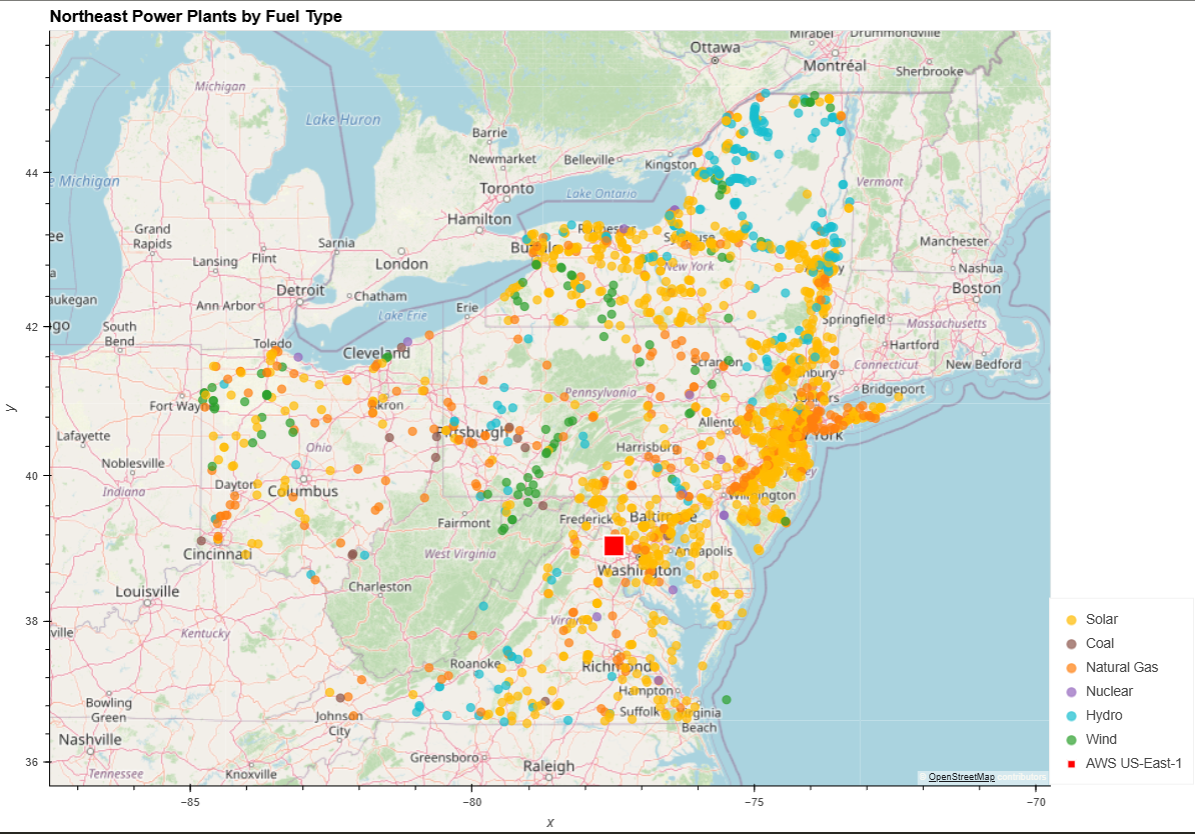
Three public data layers joined to ask whether the AI data-center boom lines up with "100% renewable" messaging and what households actually pay: PJM capacity-auction results, EIA-861 retail residential prices, and EPA eGRID + EIA-923 generation and carbon intensity. Focused on PJM with Northern Virginia as the cluster, with interactive Panel/HoloViews dashboards.

  • PJM capacity prices rose sharply after 2024 with high clears projected into 2026–27
  • Dominion cleared at a record for 2025/26 and became its own zone on projected demand
  • Cleared capacity is still mostly gas, coal, and nuclear
Who pays for data centers? Capacity markets, bills, and the carbon gap figure
computer vision · forensics · Dec 2025solo

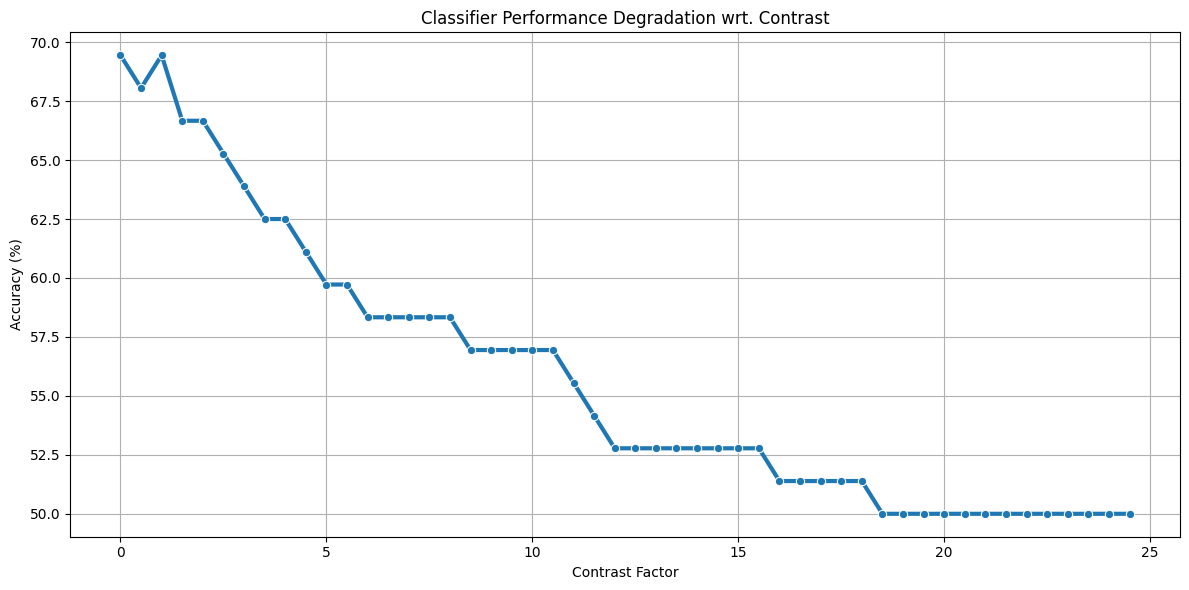
Spliced-image detection and robustness curves

A small CNN trained to tell authentic photographs from spliced (doctored) ones, then stress-tested: accuracy is measured as Gaussian blur and contrast transforms grow, producing degradation curves that show where the detector stops working. Includes explainability passes over the decisions.

Spliced-image detection and robustness curves figure
computer vision · classical ml vs deep learning · Dec 2025solo

AI-generated image detection: classical features vs. a fine-tuned ResNet

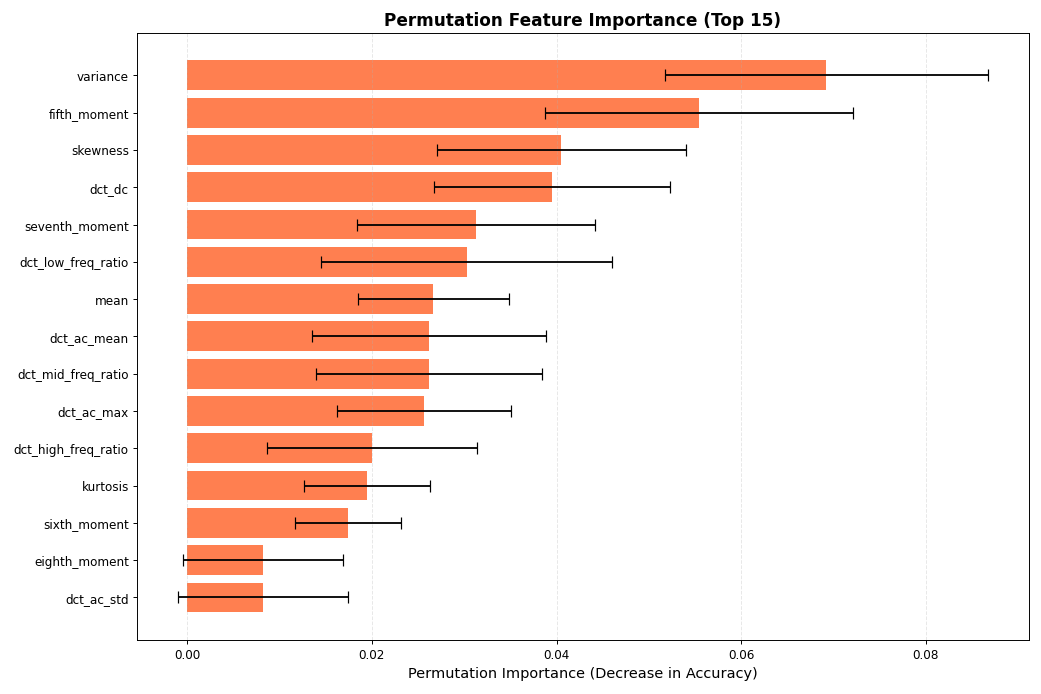
Two detectors for AI-generated images built side by side. A random forest over engineered features (statistical moments through fifth order, DCT coefficients, FFT frequency ratios) against a fine-tuned ResNet50, both explained with LIME and Integrated Gradients on a 975-image Kaggle set.

  • Random forest ~71%, ResNet50 ~79%
  • Variance and the 5th-order moment were the most important engineered features; the ResNet attends to texture and edge patterns
AI-generated image detection: classical features vs. a fine-tuned ResNet figure
graph deep learning · independent research · Mar 2025solo

Predicting Molecular toxicity with a Graph Convolutional Network

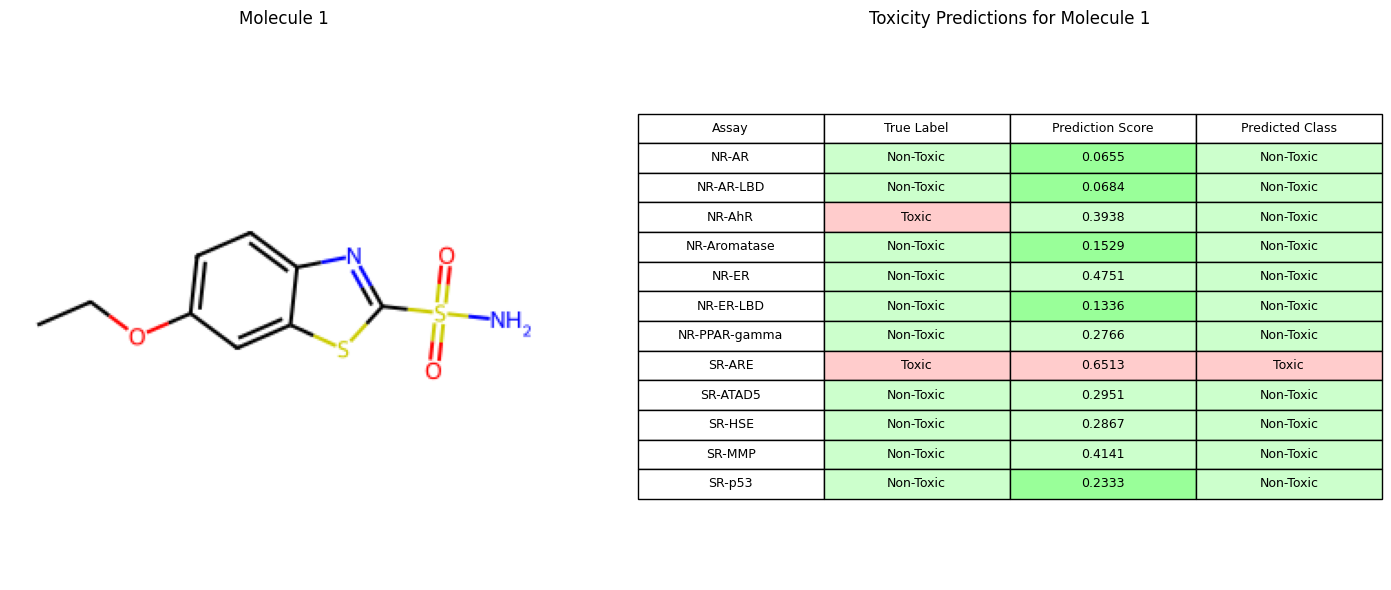
A graph convolutional network that predicts whether a molecule is toxic from its structure, trained on the Tox21 dataset with molecules as graphs and adjacency matrices as the input representation. Two weeks of independent research for a machine-learning seminar, presented to a panel of six professors including the heads of the CS and Math departments, with a one-hour recorded lecture on how GCNs differ from ordinary neural networks.

  • ~75% accuracy on Tox21 with a small GCN
  • Adjacency-matrix construction and its spectral properties worked out by hand before touching PyTorch Geometric
Predicting Molecular toxicity with a Graph Convolutional Network figure